skip to main |
skip to sidebar
 When it’s cold outside, unless I am under extreme time duress, I can’t help myself from being an “energy hogging jerk” by drastically abusing rule number two: taking really long hot showers.
As discussed before, I hate taking showers due to the time consuming rites and rituals that are involved with being a girl. Shaving, exfoliating, body lotions, blow-drying, ugh... With so many unpleasant parts of the bathing process, I try going to enjoy the parts of it that I can, i.e. feeling as warm as possible, for as long as possible, under a hot cascade of water. During the winter, it seems like any time of day, taking off your warm clothing and getting in the shower is an assault to the senses. Being cold is such an unpleasant feeling… but the worst part is getting out of the shower and standing dripping wet and shivering. (Hopefully NOT underneath or near an air-blowing vent.) To stave off the inevitable shivering bout, I of course put off this worst part of an evil shower for as long as possible… I mean talk about an unhapy ending!
However, I didn’t fully realize before that by prolonging my warm showers, I was being a jerk too? (Like my grandmother always says about the theme of Harry Potter, "evil" is contagious… figures that instead of the shower cleansing me like its meant to, it just makes me as evil as it is. Get thee behind me, shower.)
Here’s the expert’s take:
A long hot shower may be a small luxury, but those extra minutes spent
escaping with your thoughts under the body-warming water stream can quickly earn you some icy glares. For starters, hot-water tanks are finite and nobody enjoys a cold shower. What's more, hot-water heaters account for about 15 percent of an average home's energy bills, according to the Alliance to Save Energy.
Try to limit yourself to five minute showers to make your housemates and bank
accounts happy. If that doesn't work, at least invest in a low-flow shower head,
Rogers said. Another option is a so-called tankless water heater. These
appliances generate a continuous stream of hot water when they are on –i.e. the
hot water doesn't run out – and when the hot water is turned off, it is off. The
devices do cost more than a tank, but tend to last longer and consume less
energy so they pay for themselves in a few years.
I feel like in a fluffy way—the point is made: take shorter showers; the less water used, the better. This one sounds easier in theory than it may be in actuality, but I’m willing to give it a try. I guess on the bright side, less time in the shower means more time and money to spend on the après-shower routine… (Which is good, because rubbing a rose on my face alone takes at least 40 minutes.)

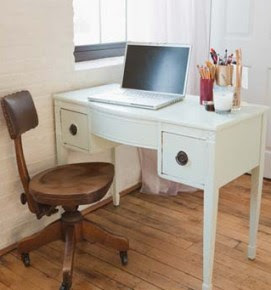 One of the articles on my nerdy MSNBC.com homepage caught my attention the other morning. (Yes, at work, my homepage is set to a respectable site, as opposed to the smut I enjoy in my free time.) “Are you an energy hogging jerk?” it asked, in big, bold letters. Intrigued,(“Hmm, am I a jerk and don’t even know it…?”) I clicked on it—and read about some interesting, everyday things that we are all probably guilty of—that are big-time energy sucks. Instead of writing a massive, epic, tome of a post right here and reviewing allll of them, I thought it might be interesting to share the items one by one, so that way I can add whatever personal insights I want to, without having to worry about getting too long and wordy. (You know how I like to include my personal anecdotes.)
So, without further ado, sign #1 that you are an Energy Consuming Jerk: leaving your computer on all the time.
Gulp.
At home and work, I am so guilty of this.( As are many of my family members and co-workers—which really doesn’t make my actions any better, and frankly just makes everything worse overall by increasing the amount of energy being wasted.) In the kitchen at my parents house, the computer is on 24/7. In my apartment, my roommates Apple is always on (can’t miss any possible incoming gmail chat IMs!). And maybe worst of all, only because its compounded by multiple people, our computers at work are almost never turned off at the end of the day. Ut oh…
 “Let's face it: Booting up a computer eats time off the clock, an annoyance for everyone from deadline-pressed cubicle warriors to retirees eager to logon to the Eons social network. But that's no excuse to leave your computer up and running 24 hours a day – especially when power-saving options are built in to the machine.
Almost all computers come equipped with energy-saving sleep or standby modes, which can be set to automatically kick in when the computer is idle for awhile – say 20 minutes. Usually, a toggle of the mouse or tap on the keyboard is sufficient to snap the computer awake.
After a long nap, some computers will delve into an even-deeper energy-saving hibernation mode. But even then, the computer is still sipping electricity.
Energy experts recommend turning the computer off overnight and longish breaks in the day. Contrary to popular belief, this will not harm the computer's lifespan, noted Rogers energy-efficient jerk, noted John Rogers, a senior energy analyst with the Union of Concerned Scientists in Cambridge, Mass.”
Even though simply turning off a computer seems like such a small gesture to make, it oddly will be a significant habit to change. Yesterday afternoon when the clock struck 5pm, I took the time to close out of all my applications, and powered off my computer. At home I turned off my lap-top when I was done uploading some pics. Small gestures for sure, and yet I oddly felt better knowing that it all adds up, and it all helps...
 When it’s cold outside, unless I am under extreme time duress, I can’t help myself from being an “energy hogging jerk” by drastically abusing rule number two: taking really long hot showers.


